
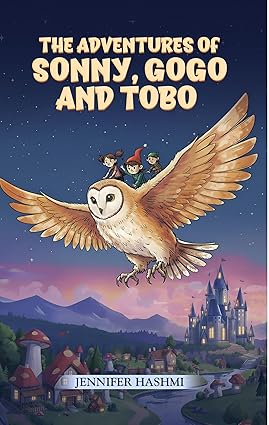
Most fantasy books promise adventure. Jennifer Hashmi's The Adventures of Sonny Gogo and Tobo: An Epilogue actually delivers it and then some. Think hidden cellars, an iron ring in a stone wall, a ghostly party no one else can see, and a trip through time that nobody planned for. This book quietly sits in the children's fantasy genre, but it carries the kind of layered storytelling that adults genuinely appreciate, too.
For anyone who grew up loving C.S. Lewis or Lloyd Alexander, this epilogue feels like a warm, familiar hand on the shoulder, except it surprises you when you least expect it.
A Story That Begins With Boredom and Goes Somewhere Extraordinary
Sonny is twenty years old, sitting at a palace window, watching life move without him. He chose Pongoland over Earth. He gave up everything familiar to him, his parents, his friends, his own culture, to become Prince Regent of an island kingdom that trades in gemstones and hand-woven cloth instead of cash. Noble choice. Lonely reality.
That opening tension feels real in a way fantasy rarely bothers with. The story doesn't rush past it. Hashmi takes time with Sonny's restlessness, his longing for a companion, and his conversation with the Island's wise woman, Mother Fulati. Anyone who has ever felt stuck between two versions of their own life will recognize something of themselves in that window scene.
The Moment the Adventure Actually Kicks In
Then Tania arrives. She is the daughter of Maridoland's Chief Minister, visiting Pongoland for an official delegation. She and her younger brother Tenby have snuck into the palace cellars with a hand-drawn map from a hermit-wizard named Gareth. They are hunting for an iron ring that supposedly opens a portal to another island.
Sonny and Gogo stumble upon them mid-search. And rather than turning them in, they join the hunt.
That sequence, the dark tunnel, chalk marks on walls, the growing certainty that something ancient is hidden here, reads like pure adventure. Hashmi builds suspense steadily without resorting to cheap tricks. When the iron ring finally appears, the reader feels the same jolt the characters do.
Ghost Parties, Burned Castles, and a Crime From 150 Years Ago
Without giving away too much, the portal deposits the group somewhere unexpected and somewhen unexpected too. They step into what appears to be a lively party in a grand house, full of laughing guests in old-fashioned clothes. The problem? Nobody at the party can see them.
Except for a small dog, which is where the book earns genuine charm points.
What follows involves a burned-out castle, a centuries-old injustice, a locked iron safe, and a group of young people who realize they may have been sent back in time for a very specific reason. The moral weight here is real land rights, exploitation, guilt that outlasts death, but Hashmi carries it lightly. The story never becomes a lecture.
Why This Book Works on Multiple Levels
Hashmi built the Sonny Gogo world across multiple books, and this epilogue rewards longtime readers while still welcoming newcomers. The Archipelago Pongoland, Maridoland, Beldeena, and the rest function like a fully realized world with its own economy, governance, and spiritual philosophy. It runs without money. Kings serve their islands rather than exploit them. Wise women like Mother Fulati hold genuine authority.
There is something quietly radical about that setup, and this book leans into it. A subplot involving an artist named Madrico, a man who has spent years resenting his son's talent rather than discovering his own, lends the narrative unexpected emotional depth. Mother Fulati's handling of that situation alone is worth the read.
King Arthur and Merlin hover over the whole story, not as characters but as living mythology that the islands genuinely believe in. Hashmi treats legend as something that travels across dimensions, across centuries, across generations. That approach gives the book a spiritual warmth that sets it apart from most adventure fantasy.
The Human Question at the Center of It All
Strip away the portals and time travel, and this book asks something every reader can connect with: what happens when you are brave enough to make an unconventional choice, and then have to live inside it?
Sonny is not a reluctant hero. He chose his life. But choosing something doesn't make it simple. That honesty that the right path still has hard days grounds the entire story in something recognizably human, even in a world where owls carry passengers between floating islands.
The Verdict
Jennifer Hashmi has spent decades building a world worth caring about. The Adventures of Sonny Gogo and Tobo: An Epilogue proves that the world still has stories left to tell. It is a book for readers who believe adventure can carry meaning, that old wrongs deserve to be set right, and that sometimes the most mysterious thing in the room is a perfectly ordinary iron ring.
If that sounds like your kind of story, the cellar door is open.